

The Client Call That Changes Everything
It usually starts with a simple message from a client: “Hey, our website is down. Can you check it quickly?” At first, it feels manageable. You log in, update a plugin, clear the cache, and the site comes back online. The client is thankful, and you feel like you saved the day. But then it happens again. Another plugin conflict. A slow-loading homepage. A broken contact form. A security alert. Suddenly, your creative agency, SEO firm, or web design studio is spending hours fixing technical problems instead of winning new projects.
This is where white label wordpress maintenance becomes more than just a support service. It becomes a smart agency growth system. Instead of handling every update, backup, malware scan, uptime issue, and performance fix yourself, you partner with a silent technical team that works under your brand. Your clients see your agency as reliable, proactive, and professional, while the behind-the-scenes experts manage the ongoing care.
For agencies that want to grow without hiring a full in-house support department, this model can be a practical solution. It protects client websites, improves satisfaction, creates recurring revenue, and gives your team more time to focus on strategy, design, marketing, and sales.
What White Label Maintenance Really Means
At its core, white label wordpress maintenance is a service where one company handles WordPress support, updates, monitoring, security, backups, and technical care for another agency’s clients under that agency’s brand. The client usually never knows there is an external provider involved.
Your agency remains the main point of contact. Reports, communication, and service delivery can be branded with your logo, tone, and business name. The maintenance provider works quietly in the background, making sure the websites stay secure, updated, and functional.
This is different from simply outsourcing random tasks to freelancers. A proper white-label setup is structured, repeatable, and designed for agencies that manage multiple client websites. It allows you to offer maintenance packages as if they are your own internal service.
The goal is simple: your agency sells the service, owns the relationship, and keeps the client trust. The technical partner handles the daily website care that keeps everything running.
Why Agencies Need Maintenance Support
Many agencies are great at building websites but struggle to maintain them long-term. Once a site is launched, clients still need help. WordPress core updates, plugin updates, theme updates, security checks, spam prevention, broken link reviews, and speed improvements do not stop after launch.
Without a proper maintenance system, small website issues can quickly become big problems. A neglected plugin may create a security risk. An outdated theme may break the layout. A missing backup may turn a simple mistake into a major crisis. For the client, these problems reflect poorly on the agency, even if the original design was excellent.
Agencies also lose time when they handle support reactively. Every urgent request interrupts the team. Designers stop designing. Developers stop building. Account managers spend time calming clients. This can reduce productivity and affect profitability.
With a structured maintenance partner, agencies can turn unpredictable support requests into a stable monthly service. This creates a smoother workflow for both the agency and the client.
Key Services Included In Maintenance
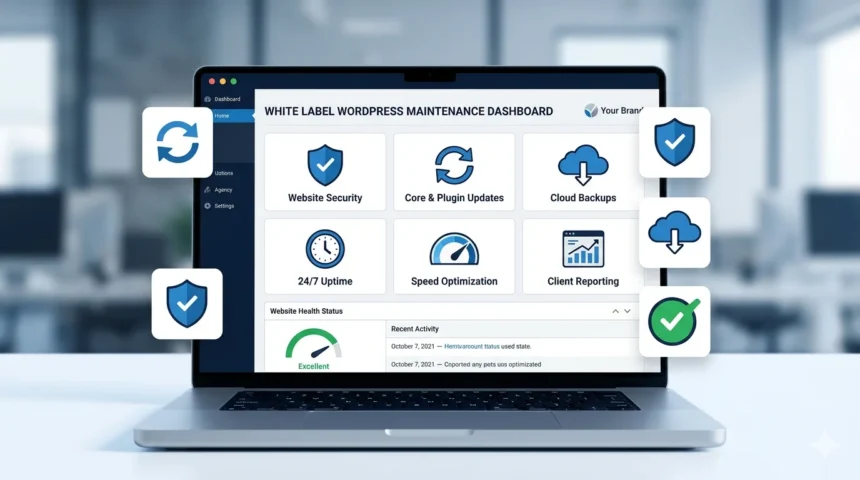
A strong maintenance plan should cover the most important areas of WordPress website health. The exact services may vary, but most agency-focused care plans include technical updates, security monitoring, backup management, performance checks, uptime monitoring, and regular reporting.
WordPress Core And Plugin Updates
WordPress websites depend on regular updates. These updates improve security, fix bugs, and keep the site compatible with modern tools. However, updates can sometimes cause conflicts. A plugin update may break a form, affect a layout, or create an error.
A professional maintenance team does not simply click “update all” without care. They check the site, test important functions, apply updates safely, and review the website after changes. This reduces risk and gives clients peace of mind.
For agencies, this is especially important when managing many websites. Updating one site manually is easy. Updating 30, 50, or 100 websites every month requires a proper system.
Website Backups And Recovery Planning
Backups are one of the most important parts of website maintenance. If something goes wrong, a clean backup can save the site. This may include server issues, human error, malware problems, plugin conflicts, or failed updates.
Good maintenance includes scheduled backups, secure backup storage, and a clear recovery process. Backups should be tested from time to time to make sure they actually work. A backup that cannot be restored is not useful when a client needs urgent help.
For agencies, backup management helps protect their reputation. When a client asks, “Can you restore the site?” your agency should have a confident answer.
Security Monitoring And Malware Protection
WordPress is popular, which also makes it a common target for attacks. Many security issues happen because websites are not updated, passwords are weak, or suspicious files are not detected early.
Maintenance services often include security scans, malware checks, firewall monitoring, login protection, spam control, and alerts for suspicious activity. This helps reduce the risk of hacked websites and downtime.
If malware is found, some maintenance providers also offer cleanup support. This is valuable because clients often panic when they see warnings from browsers, hosting companies, or Google Search Console.
Speed Checks And Performance Improvements
Website speed affects user experience, conversions, and search performance. A slow website can frustrate visitors and reduce leads. Many clients do not know why their site is slow, but they expect the agency to solve it.
Maintenance may include basic performance reviews, image optimization, caching checks, database cleanup, and plugin audits. The aim is not always a full speed rebuild, but regular care can prevent performance from getting worse over time.
For agencies offering SEO or paid ads, performance support is especially valuable. Traffic is only useful when the website loads properly and gives users a smooth experience.
Uptime Monitoring And Error Alerts
Clients often notice downtime at the worst possible moment. Maybe they are running ads, launching a campaign, or waiting for customer inquiries. If the website is offline, they expect quick action.
Uptime monitoring checks whether a website is available. If the site goes down, the maintenance team receives an alert and can investigate. This proactive approach is much better than waiting for a client to complain.
Error monitoring can also help detect problems such as broken pages, server errors, failed forms, or technical warnings. These checks help agencies look more professional and dependable.
How Agencies Benefit From White Labeling
The biggest benefit of white label wordpress maintenance is that it helps agencies grow without adding heavy internal workload. You can offer a valuable ongoing service without building a full technical support department from scratch.
This creates several business advantages. First, it improves client retention. Clients are more likely to stay with an agency that continues to support their website after launch. Second, it creates recurring revenue. Instead of relying only on one-time website projects, agencies can earn monthly fees from maintenance plans.
Third, it protects your team’s time. Your designers, developers, marketers, and project managers can focus on higher-value work. Technical care is handled by specialists who already have systems in place.
Fourth, it improves your brand image. When clients receive regular reports, quick support, and proactive care, they see your agency as organized and dependable. This can lead to referrals, upsells, and stronger long-term relationships.
Building Recurring Revenue With Care Plans
Project-based income can be unpredictable. Some months are busy, while others are slow. Maintenance packages help agencies build monthly recurring revenue, which makes cash flow more stable.
A web design agency can offer care plans after every website launch. An SEO agency can include technical maintenance as part of its monthly service. A digital marketing agency can use maintenance to make sure campaign landing pages and lead forms keep working.
The key is to package the service clearly. Clients should understand what is included, what is not included, and why the service matters. For example, a basic plan may include updates, backups, and uptime monitoring. A higher plan may include security cleanup, speed improvements, content edits, and priority support.
When maintenance is positioned correctly, it does not feel like an extra cost. It feels like website protection, business continuity, and peace of mind.
Choosing The Right Maintenance Partner
Not every provider is suitable for agency white-label work. You need a partner that understands confidentiality, branding, communication, and reliability. The wrong provider can create delays, poor quality work, or confusion with clients.
Look for a partner that offers clear service levels, branded reports, responsive support, secure processes, and experience with multiple WordPress setups. They should understand common themes, plugins, page builders, hosting environments, and eCommerce platforms.
Also check how they handle emergencies. If a site goes down, how fast do they respond? If an update breaks the layout, who fixes it? If malware is detected, is cleanup included or charged separately?
A strong white-label partner should feel like an extension of your agency, not just a vendor.
Important Features To Look For
Before choosing a provider, review the features carefully. A good maintenance service should be practical, transparent, and easy to resell.
Branded Reports For Client Trust
Branded reports are very important for agency relationships. These reports show clients what work has been completed, such as updates, backups, uptime checks, security scans, and performance reviews.
Reports help clients understand the value of the monthly fee. Without reports, maintenance can feel invisible. With reports, clients see that their website is being cared for regularly.
The reports should ideally include your agency logo, contact details, and simple explanations. Avoid overly technical language that confuses clients.
Clear Support Scope And Limits
A maintenance plan should clearly define what is included. This prevents misunderstandings later. For example, does the plan include content edits? Does it include new page creation? Does it cover plugin license renewals? Does it include emergency support?
Clear scope protects your agency’s profit margin. If clients expect unlimited development work inside a low-cost plan, the service can quickly become unprofitable.
A good provider will help you understand the boundaries so you can sell packages confidently.
Secure Access And Account Management
Website maintenance requires access to WordPress dashboards, hosting accounts, plugins, and sometimes DNS settings. Security must be handled carefully.
Your provider should use safe login practices, password managers, role-based access, and secure communication. They should avoid sharing sensitive details through unsafe channels.
This matters because your agency is responsible for client trust. A careless access process can create serious risk.
Flexible Plans For Different Clients
Not all clients need the same level of support. A small brochure website may only need updates, backups, and monitoring. An online store may need more advanced support, speed checks, WooCommerce testing, and urgent response options.
Flexible maintenance plans allow your agency to serve different client types. This also helps with pricing. You can create basic, standard, and premium packages based on client needs.
How To Sell Maintenance Confidently
Many agencies struggle to sell maintenance because they present it as a technical add-on. Clients may not care about plugin updates or database optimization. They care about business outcomes.
Instead of saying, “We will update your plugins,” explain the benefit: “We help reduce the risk of website errors, downtime, and security issues.” Instead of saying, “We provide backups,” say, “If something goes wrong, we can restore your website faster.”
Focus on protection, reliability, and peace of mind. Clients understand the value of avoiding problems. They also understand that their website supports leads, sales, bookings, and credibility.
The best time to sell maintenance is during the website launch process. Once the client approves the final site, explain that a website needs ongoing care just like a car needs servicing. This makes the offer feel natural rather than forced.
Pricing Models For Agency Profitability
Pricing should leave enough room for profit while still feeling fair to the client. Many agencies use tiered monthly plans. For example, a basic plan may cover essential updates and backups. A standard plan may include security monitoring, reports, uptime checks, and minor edits. A premium plan may include priority support, performance reviews, and more frequent checks.
When setting prices, consider the provider cost, your agency margin, account management time, client communication, and risk level. Do not price too low just to win clients. Cheap plans often attract demanding clients and reduce profitability.
Also consider bundling maintenance with other services. For example, SEO clients may receive technical care as part of a larger monthly package. Website clients may receive a discounted first month after launch.
A profitable maintenance model should be easy to explain, easy to deliver, and simple for clients to renew.
Common Mistakes Agencies Should Avoid
Many agencies make the mistake of offering support without defining limits. This can turn a maintenance plan into unlimited free development. Clients may ask for new pages, design changes, plugin setup, content uploads, and custom coding under the same monthly fee.
Another mistake is failing to communicate value. If clients never receive reports or updates, they may wonder why they are paying every month. Regular reporting solves this problem.
Some agencies also choose providers based only on price. Low-cost support may seem attractive, but poor service can damage client relationships. Reliability matters more than saving a small amount each month.
Finally, agencies sometimes wait too long before offering maintenance. If you only offer support after a website breaks, the client may already be frustrated. It is better to position maintenance as a normal part of responsible website ownership.
Creating A Smooth Client Experience
The client experience should feel simple. They should know who to contact, what is included, how requests are handled, and when they will receive reports. Your agency should remain the trusted face of the service.
Create a clear onboarding process. Collect website access, hosting details, plugin license information, and client expectations. Run an initial website health check to identify existing problems. This helps avoid being blamed for old issues later.
Then set a monthly rhythm. Updates are completed, backups are checked, reports are sent, and any concerns are communicated clearly. Over time, this routine builds trust.
When clients feel supported, they are more likely to stay with your agency and buy additional services.
Best Fit For Different Agency Types
White label wordpress maintenance works well for web design agencies, SEO agencies, branding studios, marketing consultants, hosting resellers, and freelance developers who want to grow.
For web design agencies, it adds recurring income after website launch. For SEO agencies, it supports technical health and performance. For branding studios, it gives clients a complete post-launch solution. For freelancers, it creates a more professional service without needing to be available all the time.
This model is especially useful for agencies that want to scale but do not want to hire full-time WordPress support staff. It offers operational support while keeping the agency-client relationship intact.
Measuring Success And Long-Term Value
To know whether your maintenance service is working, track both business and technical metrics. Business metrics may include monthly recurring revenue, client retention, support response time, upsell rate, and client satisfaction.
Technical metrics may include uptime percentage, number of completed updates, security scan results, backup success rate, website speed improvements, and resolved support tickets.
These numbers help your agency improve the service over time. They also help show clients that maintenance is not just a monthly fee. It is an active service that protects their website and supports their business.
Over the long term, maintenance can become one of the most stable parts of an agency’s revenue. It can also improve client loyalty because your agency remains involved after the initial project ends.
Conclusion: A Smarter Way To Scale
For agencies, growth is not only about finding more clients. It is also about serving existing clients better without overwhelming the team. Websites need ongoing care, and clients need reliable support. When agencies ignore this need, they often face urgent fixes, unhappy clients, and lost productivity.
White label wordpress maintenance gives agencies a practical way to solve that problem. It allows you to offer branded website care, protect client relationships, build recurring revenue, and keep your internal team focused on higher-value work.
The best approach is to choose a reliable partner, create clear packages, explain the business value, and make maintenance part of every website conversation. When done properly, it becomes more than a technical service. It becomes a growth engine for your agency and a safety net for your clients.