


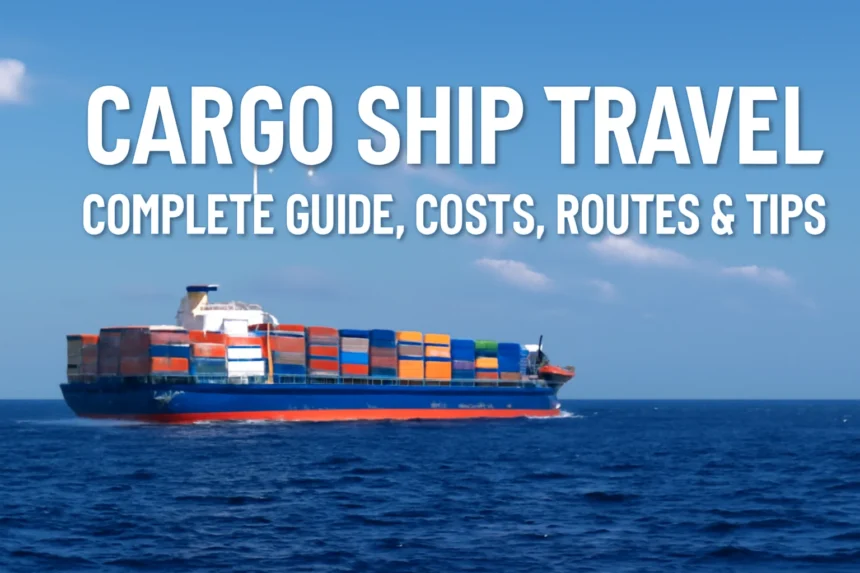
Most people imagine travel in two ways: flying through the clouds or sailing on a shiny cruise ship with thousands of passengers. But there’s another, far quieter option that many travelers have never heard of cargo ship travel. It’s slow, peaceful, and incredibly different from the typical holiday experience. Instead of crowds, you get stillness. Instead of entertainment shows, you get open ocean views. And instead of fancy buffets, you share simple meals with the ship’s officers and crew.
This form of travel may seem mysterious at first, but it’s becoming more popular among writers, digital nomads, adventure seekers, and people who want a true break from their busy lives. In this guide, we’ll explore what cargo ship travel really looks like, how to book it, what it costs, and whether it’s the right choice for you.
What Is Cargo Ship Travel?
Cargo ship travel means boarding a working freight or container ship as a passenger. Unlike a cruise ship designed for vacationers, a cargo vessel is built to transport goods across long distances. But many shipping lines also offer a few passenger cabins usually between 3 and 12 for travelers who want a quiet, authentic experience at sea.
You won’t find swimming pools, cinemas, kids’ clubs, or entertainment decks. What you will find is something far more rare today: uninterrupted days of calm, silence, and natural beauty.
Most cargo ships operate on fixed commercial routes, crossing oceans from one continent to another. Passengers join the journey and live alongside the crew, observing the vast world of maritime logistics from up close.
Why People Choose Cargo Ship Travel
Cargo ship travel attracts a specific kind of traveler someone who values time, space, and solitude. Here are the most common reasons people choose it:
Digital Detox
Many ships offer little to no WiFi. For travelers who want a complete reset from screens, notifications, and social media, this is ideal.
Creative Focus
Writers, photographers, and thinkers often use the time at sea to work on long projects without distractions.
Love for the Ocean
Some travelers enjoy waves, winds, and sunrise views from a quiet deck.
Unique Experiences
Cargo ship travel is rare and unconventional something very few people will ever try.
Crowd-Free Environment
If the idea of thousands of tourists on a cruise ship feels overwhelming, a cargo ship offers the opposite: space and freedom.
What to Expect Onboard
A cargo ship has no glamor, but it provides comfort, privacy, and simplicity. Here’s what daily life looks like.
Private Cabins
Passengers usually stay in private cabins similar to small hotel rooms. These include:
- A bed
- Desk
- Private bathroom
- Window or porthole
Some ships offer owner’s cabins, which are larger and more comfortable.
Meals With the Crew
Food is included in the fare. You’ll eat in the officers’ mess hall, where meals are simple but filling. It’s a great opportunity to learn about maritime life from the crew.
Daily Rhythm
Life onboard is slow and steady. Common activities include:
- Reading books
- Walking on the deck
- Watching sunsets
- Working on personal projects
- Observing the ship’s operations
No Entertainment
There are no casinos, pools, nightclubs, or shows. Your entertainment is the open sea.
Limited Internet
Some ships offer paid satellite WiFi, but it’s usually very slow. Many travelers come prepared with offline books, movies, and work.
Popular Cargo Ship Travel Routes
Cargo vessels travel across nearly every major ocean. While routes vary depending on shipping schedules, here are some of the most common and scenic options:
Transatlantic Route (Europe ↔ USA)
One of the most famous routes, offering 10–15 days at sea.
Europe ↔ Asia
Often through the Suez Canal. These long journeys can take 25–40 days.
Asia ↔ Australia or New Zealand
A great option for travelers interested in the Pacific.
South America ↔ Europe
This route crosses beautiful equatorial waters with warm climates.
Round-the-World Cargo Ship Travel
Some cargo ships complete full global circuits lasting up to 90–120+ days. These are rare but highly sought after.
How Much Does Cargo Ship Travel Cost?
Cargo ship travel is often misunderstood as a cheaper alternative to cruising. In reality, it’s not budget travel, but it offers value differently.
Typical Cost
- $100–$150 per day
- Includes cabin, meals, and access to the ship’s facilities
Additional Costs
- Port charges
- Travel insurance
- Medical certificate
- Visas for countries on the route
Round-the-world itineraries can cost $10,000–$15,000+, depending on duration and cabin type.
Pros and Cons of Cargo Ship Travel
Pros
- Peace
- Large private cabin
- No crowds
- Unique memories
- Chance to watch real maritime operations
- More environmentally efficient than flying
Cons
- Very slow
- Limited communication
- Possible delays
- Little medical support
- No entertainment
- The weather can get rough
Cargo ship travel isn’t for everyone but for the right traveler, it’s unforgettable.
Is Cargo Ship Travel Safe?
Cargo ships follow strict international maritime safety protocols. All passengers receive instructions on:
- Emergency drills
- Muster stations
- Lifeboat procedures
However, travelers should keep in mind:
- Doctors are not always on board
- The ship is far from land
- Seas can be unpredictable
This is why a medical certificate is often required before boarding.
How to Book Cargo Ship Travel
Shipping companies rarely sell tickets directly to passengers. Instead, specialized agencies handle the bookings.
Recommended Booking Agencies
- Freighter Travel (New Zealand)
- The Cruise People Ltd. (UK)
- Maris Freighter Travel
- CMA CGM Passenger Services
These agencies list available routes, schedules, and cabin options.
Rules & Requirements for Cargo Ship Travel
Before booking, be aware of the following:
- Minimum age: 18
- Maximum age: Often 79 (for insurance reasons)
- Medical certificate: Mandatory
- Travel insurance: Required
- Visas: Needed for ports on your route
- No pets allowed
- Respect the ship rules: Some areas are restricted for safety
Passengers are expected to be independent, responsible, and able to move freely around the ship without assistance.
Tips for First-Time Cargo Ship Travelers
Pack smart
Bring:
- Books
- Offline movies
- Snacks
- Comfortable clothes
- Seasickness medication
Expect schedule changes
Cargo ships stop for loading and unloading, and delays are common.
Be respectful
You’re on a working ship the crew is busy. Courtesy goes a long way.
Embrace slow travel
Cargo ship travel isn’t about rushing. It’s about enjoying the present moment.
Is Cargo Ship Travel Worth It?
Cargo ship travel is perfect if you want a peaceful, meaningful, and unconventional journey. It suits travelers who appreciate solitude, the ocean, and long stretches of time without distractions. It’s also great for creative people who want space to think and work.
But if you need fast internet, constant entertainment, or luxurious facilities, this type of travel may feel too quiet or too slow.
In a world where everything is getting faster, cargo ship travel brings back the beauty of unhurried exploration where the journey itself becomes the experience.
Frequently Asked Questions About Cargo Ship Travel
Is cargo ship travel legal for passengers?
Yes. Many cargo ships allow a limited number of passengers, usually 3–12, as long as they meet medical and age requirements.
How much does cargo ship travel cost?
Most voyages cost $100–$150 per day, including a private cabin and meals. Longer or rare routes can be more expensive.
Do cargo ships have WiFi for passengers?
Some ships offer paid satellite WiFi, but it is usually slow and unreliable. Many travelers prepare offline books, movies, and work.
How long does a cargo ship journey take?
It depends on the route:
-
Europe to USA: 10–15 days
-
Europe to Asia: 25–40 days
-
Round-the-world: 90–120+ days
Can you get off at every port during the trip?
Usually no. You can only disembark if the itinerary allows passenger movement and if you have the required visas.
Is cargo ship travel safe for solo travelers?
Yes, it’s very safe. Ships follow strict maritime rules, and passengers have private cabins. It is ideal for solo travelers who like quiet experiences.
Are cargo ships comfortable?
Passenger cabins are simple but comfortable. Think of a basic hotel room with a bed, desk, and private bathroom.
How do you book cargo ship travel?
Bookings are handled by specialized agencies like:
-
Freighter Travel
-
The Cruise People
-
CMA CGM Passenger Services
Are children allowed on cargo ships?
Generally no. Most companies allow only passengers aged 18–79.
Can passengers visit the engine room or bridge?
Sometimes, yes but only with permission from officers. Safety rules vary by ship.