


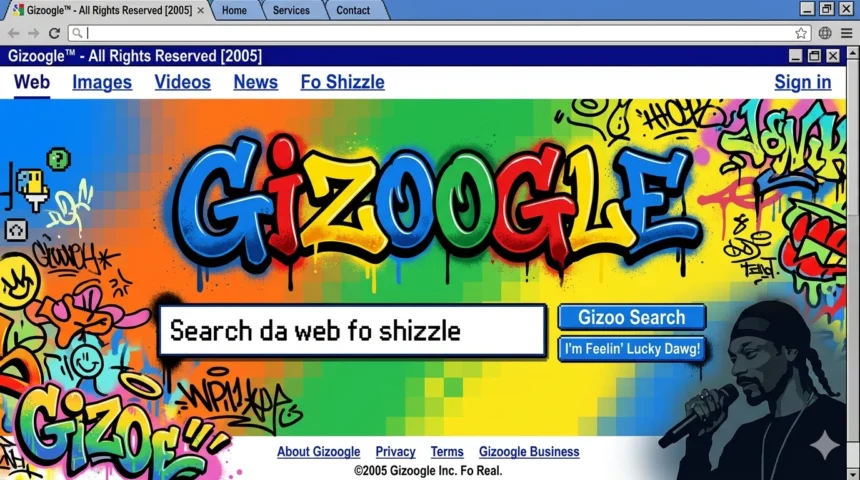
The gizoogle search engine emerged as one of the internet’s most playful experiments, transforming ordinary web searches into a world of stylized slang and humor. Created in the mid-2000s, it captured the spirit of early web culture by parodying traditional search tools with a unique linguistic flair. This article explores the origins, mechanics, and lasting impact of the gizoogle search engine, shedding light on its role in digital entertainment.
Origins of the Gizoogle Search Engine
The gizoogle search engine was born from a moment of creative inspiration around 2005. Its creator, John Beatty, drew from the vibrant slang popularized by rapper Snoop Dogg during his MTV appearances. Beatty noticed how his friend constantly mimicked this style in everyday conversation, leading him to build a tool that could apply it to the entire web. What started as a personal joke quickly gained traction online, turning the gizoogle search engine into a viral sensation.
In its early days, the site resonated with users seeking lighthearted fun amid the growing seriousness of mainstream search engines. People shared links to gizoogle search engine results on forums and social platforms, amplifying its reach. The tool’s simplicity allowed anyone to experience the transformation without technical knowhow, making it accessible to a wide audience. This organic spread highlighted how niche ideas could thrive in the decentralized web of that era.
Beatty launched the gizoogle search engine without grand ambitions, focusing instead on pure amusement. It stood out by rejecting the polished interfaces of competitors, embracing a raw, unfiltered aesthetic. Users flocked to it for laughs, often inputting news articles or personal sites to see familiar content reimagined. The gizoogle search engine thus became a snapshot of internet creativity before algorithms dominated every corner of online life.
How the Gizoogle Search Engine Works
At its core, the gizoogle search engine takes standard search queries and processes them through a custom translation algorithm. When a user enters terms, it fetches results from underlying web indexes much like conventional engines. The magic happens next: titles, snippets, and even full pages get rewritten in a dialect mimicking urban street talk, complete with exaggerated grammar and vocabulary swaps.
For example, a simple query might yield results where best restaurants becomes something like finest eateries in da hood. This rewriting relies on pattern matching and substitution rules programmed by Beatty, ensuring consistent stylistic changes across outputs. Users could also paste any URL into the gizoogle search engine to remix an entire webpage on the fly, watching text morph before their eyes.
The engine’s backend drew from open web data, avoiding proprietary tech to keep things lightweight. This approach let the gizoogle search engine run efficiently on basic servers, even as traffic spiked. Its real time processing added to the appeal, delivering instant gratification without delays. Over time, refinements improved accuracy, preventing awkward glitches while preserving the humorous intent.
Cultural Impact and Popularity Surge
The gizoogle search engine tapped into a broader fascination with language play and celebrity influence during the mid-2000s. Snoop Dogg’s persona, marked by his distinctive drawl and wordplay, provided the perfect muse. Media outlets picked up on its novelty, running stories that introduced it to mainstream audiences. This coverage fueled a surge in visits, cementing the gizoogle search engine as a cultural footnote.
Online communities embraced it for memes and pranks, often challenging friends to interpret remixed Wikipedia pages or blog posts. Its peak popularity coincided with the rise of Web 2.0, where user generated content blurred lines between creator and consumer. The gizoogle search engine exemplified this shift, empowering everyday people to alter digital narratives playfully.
Even as social media evolved, echoes of the gizoogle search engine lingered in viral trends. Parody accounts and apps borrowed its concept, adapting the slang for new contexts. This enduring influence shows how the gizoogle search engine transcended its origins, inspiring generations to experiment with digital expression.
Technical Evolution and Challenges Faced
Building and maintaining the gizoogle search engine required navigating technical hurdles common to indie projects. Beatty relied on PHP and basic databases to handle translations, scaling up as demand grew. Frequent downtime became a running joke, with the site vanishing and reappearing like a digital phoenix. These interruptions stemmed from server costs and Beatty’s solo efforts rather than any malice.
Updates to the gizoogle search engine introduced features like customizable slang intensity, letting users dial in their preferred flavor. Behind the scenes, Beatty tweaked the algorithm to handle diverse languages and formats, though English remained the focus. This iterative process mirrored the DIY ethos of early web development, where passion trumped perfection.
Legal and ethical questions arose occasionally, as remixing content raised fair use debates. The gizoogle search engine stayed in the clear by linking back to originals and avoiding commercial gain. Its non profit stance shielded it from aggressive takedowns, allowing intermittent revivals over the years.
Gizoogle Search Engine in the Modern Web Landscape
Today, the gizoogle search engine exists in a transformed online ecosystem dominated by giants like Google and Bing. While its original site fluctuates in availability, clones and tributes keep the spirit alive on GitHub and niche forums. Modern users rediscover it through nostalgia posts or algorithmic recommendations, proving its timeless charm.
The tool’s legacy informs discussions on search personalization and AI driven language models. Just as the gizoogle search engine stylized results, today’s engines tailor outputs based on user profiles. This parallel underscores how playful experiments often preview mainstream innovations.
For developers, studying the gizoogle search engine offers lessons in lightweight coding and viral mechanics. Its success without venture funding challenges the notion that scale requires sophistication. In an era of bloated apps, the gizoogle search engine reminds us of web simplicity’s power.
Comparisons to Other Novelty Search Engines
The gizoogle search engine carved a unique niche among parody search tools like Duck Duck Go’s early hacks or eHow’s quirky alternatives. Unlike purely functional rivals, it prioritized entertainment over utility, setting it apart. Tools like Gigablast offered raw index access, but none matched the gizoogle search engine’s linguistic flair.
Later entrants, such as slang translators tied to social platforms, borrowed its formula without capturing the same magic. The gizoogle search engine’s tie to Snoop Dogg gave it celebrity cachet others lacked. This blend of timing, personality, and execution made it unreplicable.
Even AI chatbots now mimic its style on demand, yet they miss the site’s unpolished joy. The gizoogle search engine thus holds a special place, bridging human whimsy and machine precision.
User Experiences and Community Stories
Anecdotes from gizoogle search engine users paint a vivid picture of its appeal. Office workers sneaked peeks during breaks, giggling at corporate sites turned streetwise. Students used it for essay outlines, claiming the remix sparked creative angles. These stories highlight its role as a stress reliever in daily routines.
Fan sites archived classic outputs, preserving gems like remixed news headlines. Communities formed around sharing the funniest results, fostering bonds over shared absurdity. The gizoogle search engine thus built a subtle social fabric, connecting strangers through laughter.
Longtime fans recall revival campaigns that brought it back online, demonstrating loyalty. These efforts underscore how the gizoogle search engine fostered a sense of ownership among users, rare in today’s ad saturated web.
Linguistic Analysis of Gizoogle’s Style
The gizoogle search engine’s dialect draws from African American Vernacular English, stylized for comedic effect. It employs contractions like fo shizzle and verb flips such as be for ongoing actions. This mirrors Snoop Dogg’s lexicon, blending authenticity with exaggeration.
Linguists note its role in popularizing slang beyond hip hop circles. By exposing mainstream content to these patterns, the gizoogle search engine democratized urban speech. It avoided mockery through affectionate intent, earning praise as cultural homage.
Over iterations, the style evolved to include broader idioms, reflecting slang’s fluidity. This adaptability kept the gizoogle search engine relevant as language shifted.
Future Prospects for Gizoogle Inspired Tools
Looking ahead, the gizoogle search engine could inspire AI enhancements for voice search or accessibility features. Imagine dialects tailored to regional accents, making tech inclusive. Developers might integrate similar filters into browsers for on demand fun.
Blockchain or decentralized webs could host permanent versions, immune to downtime. Open source forks already experiment with multilingual twists, expanding reach. The gizoogle search engine’s blueprint points to playful augmentation over replacement.
As search evolves toward multimodality, its principles endure. Voice assistants adopting slang modes would nod to this pioneer, blending utility with delight.
Why the Gizoogle Search Engine Endures
Ultimately, the gizoogle search engine thrives on its unpretentious joy, offering escape in a structured digital world. It celebrates language’s malleability, inviting users to see familiar info anew. From humble beginnings to cult status, it exemplifies web innovation’s human side.
Researchers and creators continue drawing from it, ensuring its influence persists. Whether firing up a mirror site or coding homages, enthusiasts keep the flame alive. The gizoogle search engine remains a testament to creativity’s power.
Note: The original gizoogle search engine site may not always be active, and its outputs often feature stylized, mature language. This article is for informational purposes only and does not endorse or link to external instances.