


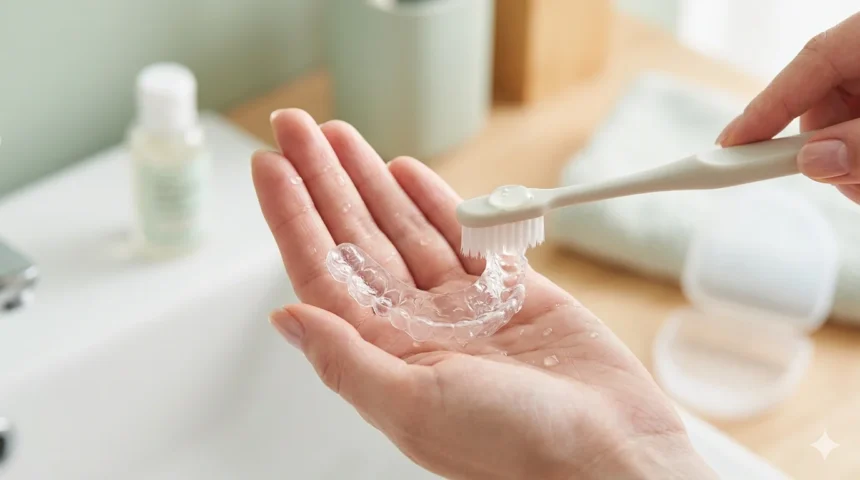
You finally finished your orthodontic treatment, and your smile looks incredible. But to keep those teeth in place, your retainer needs to become your new best friend. If you don’t keep it clean, it can quickly become a breeding ground for bacteria, leading to bad breath and unsightly stains. Learning how to clean retainers effectively is the best way to protect your investment and keep your mouth healthy.
Why Cleaning Your Retainer Matters
Think of your retainer as a magnet for everything inside your mouth. Every time you wear it, it picks up saliva, plaque (that sticky film of bacteria), and food particles. If left uncleaned, these elements harden into tartar, which is much harder to remove and can cause your retainer to smell or look cloudy.
Regular cleaning is about more than just aesthetics; it is a vital part of your oral hygiene. A dirty retainer can trap bacteria against your teeth, increasing the risk of cavities or gum irritation. If you have ever noticed white spots on your teeth, it could be a sign of mineral loss caused by trapped plaque. Maintaining a clean appliance helps prevent these issues and ensures your dental work stays pristine. If you are also curious about how dental work like bonding or retainers stay healthy, check out our other guides on practical dental care.
Understanding the Different Types of Retainers
Before you dive into the scrubbing, you need to know what kind of retainer you are handling. Different materials require slightly different levels of care to avoid damage.
Clear Plastic Retainers
These are often called Essix or Vivera retainers. They look similar to clear aligners (like Invisalign) and fit snugly over your teeth. Because they are made of thin, transparent plastic, they are prone to warping if exposed to heat and can show stains easily.
Wire-and-Plastic Retainers
Also known as Hawley retainers, these consist of a metal wire connected to an acrylic base that sits against the roof of your mouth or behind your lower teeth. These are very durable but have small nooks and crannies where bacteria love to hide.
Permanent Bonded Retainers
These are not removable. A thin wire is glued (using a process similar to what dental bonding is) to the back of your teeth, usually the lower front ones. Since you can’t take them out to soak, they require a specific flossing technique to keep them debris-free.
How to Clean Retainers at Home: Daily Cleaning Steps
The best way to clean retainers is to stay consistent. If you clean it every time you take it out, you prevent the “junk” from ever having a chance to harden.
-
Rinse Immediately: As soon as you remove your retainer, rinse it under lukewarm water. This washes away loose saliva and prevents it from drying into a crusty layer.
-
Use a Mild Soap: Apply a small drop of clear, mild dish soap or non-abrasive hand soap to the retainer. Avoid whitening toothpastes, as they often contain gritty particles that can scratch the plastic.
-
Brush Gently: Use a soft-bristled toothbrush (separate from the one you use for your teeth) to gently scrub all surfaces. Pay extra attention to the deep grooves where your molars sit.
-
Rinse Thoroughly: Wash away all the soap suds with lukewarm water. Ensure no soapy taste remains before you put it back in your mouth or into its storage case.
Weekly Deep-Clean Methods
Sometimes, daily brushing isn’t enough to freshen retainer smell or remove stubborn buildup. A weekly deep soak can reach the spots your brush might miss.
Retainer Cleaning Tablets
These are the most convenient option. Drop a specialized cleaning tablet into a glass of lukewarm water and let your retainer soak for the time recommended on the package (usually 15–20 minutes). These tablets use effervescent action to kill bacteria and break down stains.
Hydrogen-Peroxide Soak
If you prefer a DIY approach, mix equal parts lukewarm water and 3% hydrogen peroxide. Let your retainer sit in the solution for about 30 minutes. This is a powerful way to disinfect the appliance, but be sure to rinse it extremely well afterward.
Vinegar Soak
For those who want a natural solution to remove mineral buildup (tartar), white vinegar is your best bet. Mix one part white distilled vinegar with three parts lukewarm water. Soak for 15-20 minutes, then use your soft brush to scrub away any loosened debris. The vinegar smell will disappear after a quick rinse with water and a tiny bit of soap.
How to Clean Permanent Retainers
Since you can’t remove a bonded retainer, you have to clean it while it’s in your mouth. This requires a little more patience but is essential for preventing gum disease.
-
Use a Floss Threader: This tool helps you get dental floss underneath the wire. Once the floss is under, move it up and down the sides of each tooth to clear out plaque.
-
Try an Interdental Brush: These tiny, pine-tree-shaped brushes are perfect for poking between the teeth and under the wire to dislodge food particles.
-
Water Flossers: A water flosser is a game-changer for permanent retainers. The pressurized stream of water can reach behind the wire and into gaps that are hard to navigate with traditional floss.
What NOT to Do When Cleaning Retainers
Knowing what to avoid is just as important as knowing how to clean clear retainers. One mistake can warp the plastic or ruin the fit, leading to an expensive replacement.
-
Never use boiling or hot water: High temperatures will melt or warp the plastic of your retainer instantly. Always use lukewarm or cool water.
-
Avoid harsh chemicals: Bleach or alcohol-based mouthwashes are too aggressive. They can degrade the material and make the plastic brittle.
-
Don’t use abrasive toothpaste: Many toothpastes are designed to “scrub” teeth, but they will create microscopic scratches on your retainer. These scratches make the retainer look cloudy and give bacteria a place to hide.
-
Never leave it out to dry: When your retainer isn’t in your mouth or in a soaking solution, keep it in its case. Leaving it on a paper towel is the fastest way to accidentally throw it in the trash!
Storage and Routine Tips
A clean retainer is only as good as the case you put it in. If you drop a clean retainer into a dirty, bacteria-filled case, you’re back at square one.
Clean your retainer case at least once a week using warm, soapy water. Dry it thoroughly before closing it to prevent mold growth. Additionally, try to keep your cleaning supplies in one dedicated spot, like a specific drawer in the bathroom, so the habit becomes second nature.
To freshen retainer smell throughout the day, you can give it a quick rinse with a non-alcoholic, clear mouthwash. Just make sure the mouthwash isn’t brightly colored (like deep blue or green), as it can sometimes tint the clear plastic over time.
When to See Your Dentist or Orthodontist
Even with the best at-home care, your retainer won’t last forever. You should contact your dental professional if you notice any of the following:
-
Cracks or Chips: Small cracks can harbor bacteria and eventually lead to the retainer snapping.
-
Loose Fit: If the retainer feels loose or doesn’t snap into place like it used to, it may no longer be holding your teeth in position.
-
Calcium Buildup: If you see white, stony patches that won’t come off with vinegar or brushing, your dentist may need to clean it with a professional-grade ultrasonic cleaner.
-
Pain: A retainer should be snug but never painful. If it’s cutting into your gums, it needs an adjustment.
Putting It All Together: A Simple Daily Cleaning Routine
To make this easy, here is a “cheat sheet” for your daily habits:
-
Morning: Remove the retainer and immediately brush it with mild soap and lukewarm water.
-
During the Day: Rinse the retainer with water every time you take it out to eat. Never put it back in your mouth without rinsing your mouth first!
-
Evening: Give it another quick brush before putting it in for the night.
-
Once a Week: Choose a “Soak Sunday” to give it a 20-minute deep clean in a retainer solution or vinegar mix.
Conclusion
Keeping your smile straight and healthy doesn’t have to be a chore. By learning how to clean retainers at home with simple tools like mild soap and soft brushes, you can avoid bad smells and protect your teeth from bacteria. Consistency is the secret just a few minutes of care each day will keep your retainer clear and your breath fresh. Stay diligent with your routine, and your smile will stay perfectly aligned for years to come.
Frequently Asked Questions About Retainer Care
Adding a quick FAQ section is a great way to help your readers find fast answers to common concerns. Here are the most-searched questions regarding how to clean retainers at home.
Can I use mouthwash to clean my retainer?
You can use a non-alcoholic, clear mouthwash for a quick refresh, but it shouldn’t be your primary cleaning method. Avoid mouthwashes with alcohol, as they can dry out and damage the plastic. Also, steer clear of brightly colored rinses (like deep blues or purples) to prevent staining your clear retainers.
How often should I deep clean my retainer?
While you should brush your retainer daily, a deep soak is recommended at least once a week. Using a vinegar solution or a specialized cleaning tablet once every seven days helps remove stubborn mineral buildup and bacteria that a toothbrush might miss.
Is it safe to clean a retainer with baking soda?
Baking soda is a natural deodorizer, but it can be slightly abrasive. If you use it, make sure it is fully dissolved in water to create a soaking solution rather than a paste. However, for everyday care, a mild dish soap is usually the safest and most effective option for the plastic.
Why does my retainer still smell after cleaning?
If your retainer has a lingering odor, it likely has bacteria trapped in microscopic scratches or hardened tartar (calculus) that hasn’t been removed. Try a 20-minute soak in a mixture of white vinegar and water to break down the minerals, and ensure you are cleaning your storage case as well.
Can I use a denture cleaner for my retainers?
Yes, most denture cleaning tablets are safe for retainers, but you should check with your orthodontist first. Some older denture cleaners can be too harsh for certain types of clear plastic, so it is often better to use products specifically labeled for retainers or clear aligners.
Medical Disclaimer
The information provided in this article is for educational and informational purposes only and is not intended as medical or dental advice. While we strive to provide helpful tips on how to clean retainers at home, always follow the specific care instructions provided by your orthodontist or dentist. If you experience pain, a change in fit, or irritation, consult a dental professional immediately.