


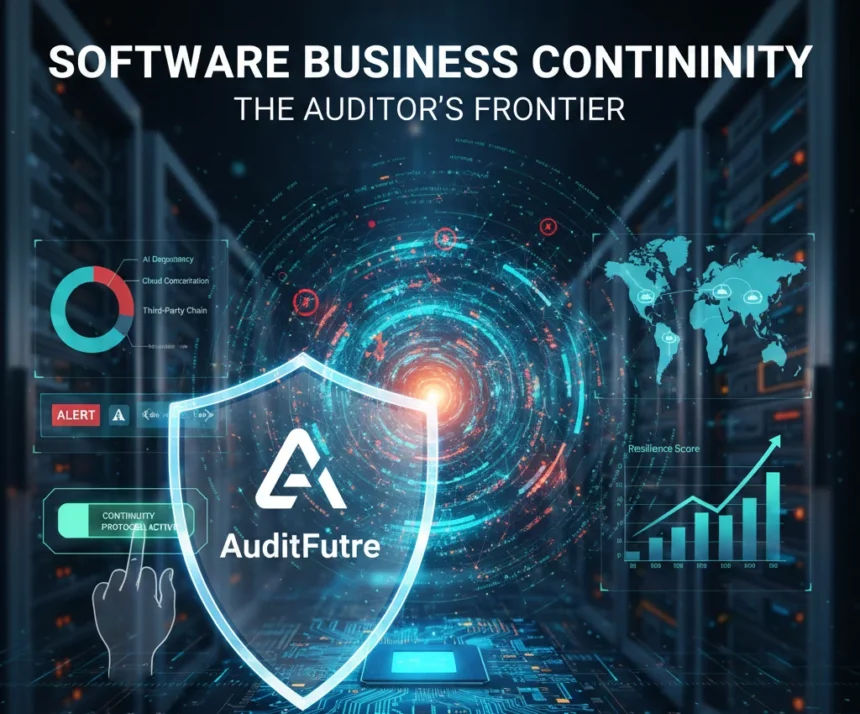
In the modern enterprise, software isn’t just a tool it’s the nervous system. From supply chain logistics to customer relationship management, virtually every critical business function relies on an intricate web of applications and data. This makes software business continuity not just an IT concern, but a paramount strategic imperative, and increasingly, a primary focus for auditors.
Gone are the days when a simple data backup plan sufficed. The landscape of digital risk has evolved, demanding a proactive, holistic approach to operational resilience. For auditors, this means a significant shift: from merely verifying the existence of a plan to rigorously assessing its efficacy and future-proofing capabilities against emerging threats.
The Shift: From Backup to Operational Resilience
The traditional view of disaster recovery (DR) was reactive: what do we do after a system fails? While essential, this approach is no longer sufficient. Software business continuity extends beyond data restoration; it encompasses the entire organizational capacity to withstand disruptions, adapt to changes, and maintain essential operations during and after an incident.
For auditors, this means moving beyond a checklist mentality. It’s not enough to confirm that a business continuity plan document exists. The modern audit demands evidence-based validation that:
-
Recovery Time Objectives (RTOs) are not just declared, but realistically achievable and regularly tested.
-
Recovery Point Objectives (RPOs) align with data loss tolerance, ensuring minimal impact on critical operations.
-
The entire software ecosystem can truly failover and resume operations within acceptable parameters, reflecting the actual financial and reputational cost of downtime.
Modern Risk Pillars: What Auditors Must Scrutinize
As software environments grow more complex, new vulnerabilities emerge. Auditors focusing on software business continuity must scrutinize these critical areas:
-
The Cloud Concentration Risk: The vast majority of businesses today operate in multi-cloud or hybrid-cloud environments. While cloud providers offer impressive resilience, reliance on a single region or even a single major provider (AWS, Azure, GCP) introduces concentration risk.
-
Audit Question: Does the client have a robust multi-cloud or cross-region failover strategy for critical applications? How is this tested, and are dependencies on third-party cloud services adequately mapped and mitigated?
-
-
The AI Dependency: As generative AI and machine learning models become embedded in core business processes (e.g., customer service chatbots, fraud detection, predictive analytics), their availability becomes crucial. An API outage from an AI provider could halt entire workflows.
-
Audit Question: For AI-driven processes, what are the fallback mechanisms if the AI service becomes unavailable? Are there manual overrides, or alternative AI providers? Is the continuity plan updated to reflect these new dependencies?
-
-
The Third-Party Chain (Supply Chain Software Risk): Modern software is an intricate tapestry of microservices, APIs, and SaaS solutions. A critical continuity plan is only as strong as its weakest link, particularly when your systems integrate SOUP Technology software of unknown provenance that may lack documented maintenance or resilience records. A disruption at a minor vendor providing a seemingly non-critical component can cascade into widespread outages.
-
Audit Question: How thoroughly are third-party software vendors’ business continuity capabilities assessed? Are contracts in place with clear RTO/RPO requirements? How does the client gain assurance that their critical vendors can recover?
-
-
The Cyber-Resilience Overlap: Ransomware attacks and sophisticated cyber threats are no longer just security incidents; they are direct threats to software business continuity. A continuity plan must integrate robust cyber-resilience strategies.
-
Audit Question: Does the continuity plan include immutable backups (WORM – Write Once, Read Many) to prevent ransomware from encrypting recovery data? Are recovery environments isolated and protected from the original attack vector?
-
Key Audit Must-Haves
To effectively audit software business continuity, auditors need to look for specific, advanced capabilities:
-
Automated Continuity Drills & Chaos Engineering Logs: Beyond annual tabletop exercises, look for evidence of automated, regular testing that intentionally injects failures into non-production or even production environments (Chaos Engineering). This provides real-world data on recovery capabilities and ensures that the framework for defining and automating critical business processes remains resilient even under extreme technical stress.
-
Granular RTO & RPO Alignment: Verify that declared RTOs and RPOs are not just arbitrary numbers but are derived from thorough Business Impact Analysis (BIA) and align with the actual financial and operational tolerance for downtime.
-
Threat-Informed Continuity: Has the organization integrated current threat intelligence into its continuity planning? Are plans updated based on the latest cyber threat landscape and potential geopolitical risks?
-
Integrated Communication Plans: A robust continuity plan isn’t just technical; it includes clear, pre-defined communication strategies for internal teams, customers, regulators, and other stakeholders during a disruption.
Comparing Continuity Frameworks: A Quick Guide for Auditors
Various frameworks provide guidance for software business continuity. Understanding their focus helps auditors determine the appropriate yardstick for their clients:
| Framework | Best For | Focus Area |
| ISO 22301 | Global Enterprises, Regulated Industries | Holistic Business Continuity Management System (BCMS), covering strategy, implementation, operation. |
| DORA (EU) | Financial Services (EU) | Digital Operational Resilience, emphasizing ICT risk management, incident reporting, and resilience testing. |
| NIST SP 800-34 | US Federal Agencies, IT-centric firms | Technical contingency planning for IT systems, focusing on detailed recovery strategies. |
| BCI Good Practice Guidelines | Broad Application | Practical guidance for professionals implementing and maintaining business continuity. |
The Future of Audit: Continuous Assurance for Business Continuity
The audit of software business continuity is rapidly moving towards continuous assurance. Rather than episodic, point-in-time reviews, the future lies in leveraging technology to monitor resilience in real-time.
Imagine dashboards that automatically track RTO/RPO deviations, report on automated failover test results, and provide a live Resilience Score for critical applications. This shift empowers auditors to provide more timely, relevant, and proactive insights, moving from forensic analysis to predictive guidance.
For auditors on AuditFuture.net, embracing this evolving landscape isn’t just about compliance; it’s about becoming indispensable strategic partners in safeguarding the digital heart of every organization. Mastering the complexities of software business continuity is crucial for navigating the audit frontier of tomorrow.